Installing an EV charger at your home in Northern Virginia, Maryland, or DC is more complex than just plugging in a device. You need to assess your electrical panel capacity, handle permits, and plan your parking layout carefully. This guide breaks down the exact steps for home EV charger prep so you can avoid delays and extra costs. Keep reading to learn how to get your installation started right with a licensed EV electrician. For more detailed information, check out our home EV charger installation checklist for Northern Virginia, Maryland, and DC.
Preparing for EV Charger Installation
Let’s dive into the essentials of preparing your home for an EV charger. This section covers everything from assessing power needs to understanding permitting requirements.
Power Needs Assessment
Determining the power requirements of your EV charger is crucial. Begin by considering your driving habits. If you frequently drive long distances, a Level 2 charger may be more suitable. This type of charger offers faster charging times, ensuring your vehicle is ready when you are.
Next, review your home’s current electrical usage. Assess whether your existing infrastructure can support additional load. This step helps prevent potential overloads or outages. Consulting with a licensed electrician can provide clarity on whether an upgrade is necessary.
Lastly, consider future needs. As EV technology evolves, having a flexible setup can save time and money. Preparing for potential upgrades now can make transitions smoother later.
Evaluating Electrical Panel Capacity
Your electrical panel’s capacity is a critical factor in installing an EV charger. Start by checking the panel’s amperage rating. Most residential homes have panels rated between 100 to 200 amps. Knowing the current load on your panel helps determine if it can handle the additional demand of an EV charger.
If your panel lacks sufficient capacity, you may need an upgrade. This process involves increasing the panel’s amperage, which can support more circuits and provide the power required for a charger. It’s best to consult with an electrician to evaluate your needs accurately.
Finally, consider future-proofing. If you plan to add more electric appliances or another EV in the future, upgrading your panel now could be beneficial. This proactive approach ensures your home remains capable of meeting your evolving electrical demands.
Understanding Permitting Requirements
Permits are essential for legal and safe EV charger installations. Each region has its specific requirements. In Northern Virginia, Maryland, and DC, you’ll need to apply for permits that ensure compliance with local codes.
Start by consulting your local building department. They can provide a list of necessary documents and fees. Following this ensures your installation meets safety standards and avoids potential fines.
Hiring a professional installer can simplify the permitting process. They have experience navigating local regulations and can help expedite approval. This step ensures your installation is both legal and up to code.
Choosing the Right Charger and Setup
Understanding the types of chargers and their setups will help you make informed decisions. Let’s explore charger levels, outlet options, and placement choices.
Level 1 vs. Level 2 Chargers
Choosing between Level 1 and Level 2 chargers depends on your needs. Level 1 chargers are typically slower, using a standard household outlet. They are suitable for overnight charging and light daily use.
Level 2 chargers, on the other hand, offer faster charging by using a 240-volt outlet. They are ideal for frequent drivers or multi-vehicle households. This option reduces charging time significantly, ensuring your EV is ready quickly.
Consider your lifestyle and driving patterns. If you need a quick turnaround and frequent use, a Level 2 charger is a wise investment. This charger not only saves time but also adds convenience to your routine.
NEMA 14-50 Outlet vs. Hardwired
Deciding between a NEMA 14-50 outlet and a hardwired setup is essential. A NEMA 14-50 outlet is versatile and allows for easy charger replacement. It is ideal if you plan to upgrade or move your charger in the future.
A hardwired setup, however, offers a cleaner look and is generally more secure. It reduces the risk of tampering and ensures a consistent connection. This option is often recommended for permanent installations.
Evaluate your long-term needs and preferences. If flexibility is key, opt for a NEMA 14-50 outlet. For a fixed, secure setup, a hardwired installation provides peace of mind.
Outdoor vs. Garage Charging Solutions
Choosing between outdoor and garage charging solutions depends on your home’s layout. Garage setups offer protection against weather and theft. They also keep your charger and vehicle in a controlled environment.
Outdoor installations provide flexibility in placement and can be ideal if garage space is limited. Ensure outdoor chargers are weatherproof and meet local safety standards.
Consider your home’s infrastructure and security needs. Garage setups can offer added protection, while outdoor placements may provide easier access. Evaluate what best fits your lifestyle and home setup.
Scheduling a Professional Site Evaluation
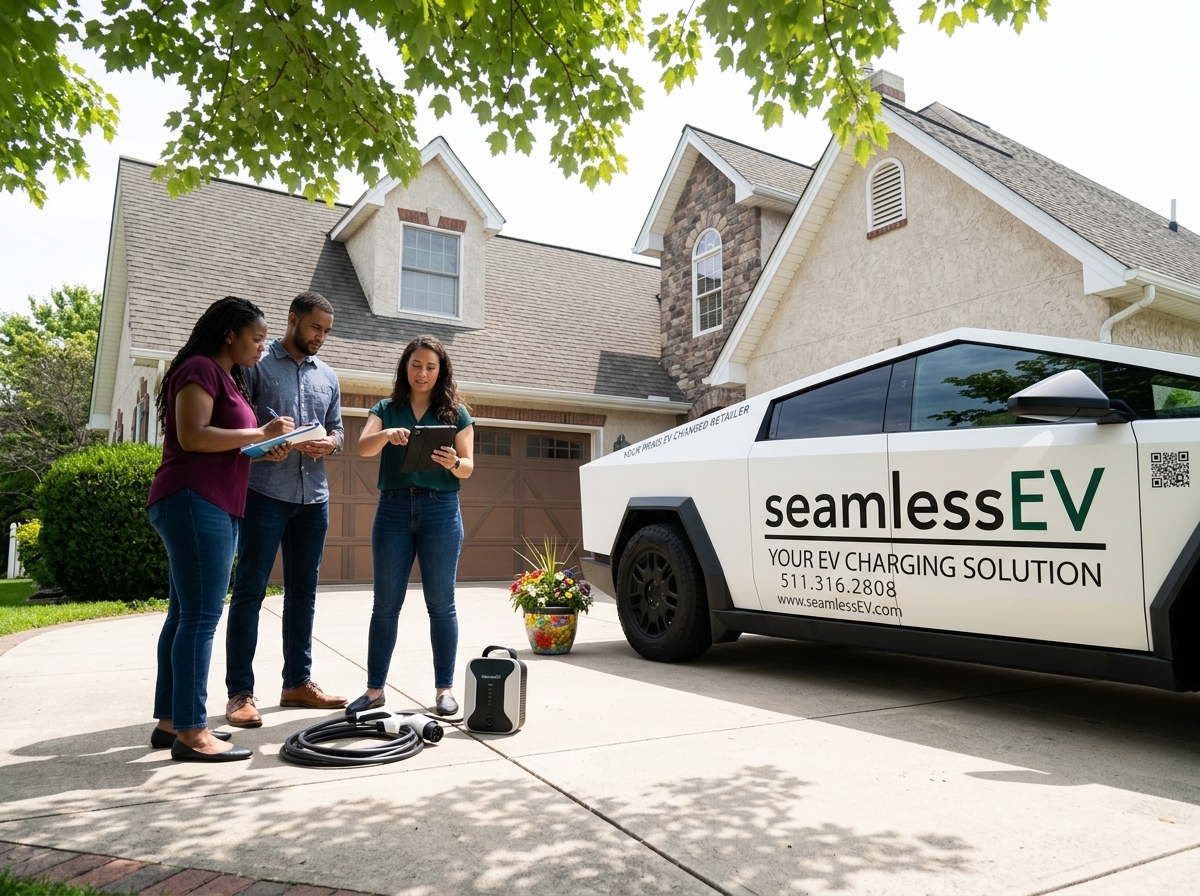
After understanding your charger and setup options, the next step is scheduling a professional site evaluation. This ensures a smooth installation process.
Benefits of Expert Load Calculation
An expert load calculation helps determine your home’s capacity to support an EV charger. Professionals assess your current load and future needs, offering solutions that prevent potential electrical issues.
This evaluation can also identify opportunities to improve energy efficiency. By optimizing your home’s electrical usage, you can reduce costs and increase reliability. It ensures your setup is both efficient and sustainable.
Engaging a professional for load calculation provides peace of mind. It confirms that your installation meets safety standards and supports all your electrical needs.
Importance of NEC Code Compliance
Compliance with the National Electrical Code (NEC) is crucial for safety. NEC standards ensure installations meet safety and performance criteria. This compliance protects your home from electrical hazards.
Professionals familiar with NEC regulations can guide you through the installation process. They ensure your setup adheres to all necessary codes, reducing the risk of issues.
Choosing a licensed installer guarantees your charger is installed correctly. This ensures your EV charger operates safely and efficiently, providing long-term reliability.
Leveraging Local Utility Incentives
Take advantage of local utility incentives for EV charger installations. Programs like Dominion Energy and Pepco offer rebates or discounts, reducing overall costs.
Research available incentives in your area. These programs often have specific requirements, such as using certified installers or purchasing certain equipment. Meeting these criteria can offer significant savings.
Working with a professional installer can help you navigate these programs. They can ensure you meet all necessary conditions to maximize your benefits. This approach can make your EV charger installation more affordable.
For more insights and updates, visit Seamless EV’s news section.
Schedule your free site check.