Installing a Level 2 EV charger at your property isn’t just about plugging in a device. It requires careful planning around electrical capacity, placement, permits, and potential costs. Knowing what to expect can save you time and avoid headaches. This guide covers what you need for a smooth Level 2 EV charger installation, from load calculations to local rebates, so you can charge your EV safely and reliably.
Understanding Electrical Requirements
When installing a Level 2 EV charger, understanding the electrical requirements is crucial. Safety and functionality depend on the right setup.
Importance of a 240V Circuit
A 240V circuit is essential for Level 2 chargers. It allows faster charging compared to standard 120V circuits. This means your vehicle gets back on the road quicker. For homeowners, this often involves checking existing electrical capacity or arranging for upgrades. Electricians can assess if your current setup supports this upgrade or if changes are needed. The focus is on ensuring your home can safely handle the increased load without issues.
NEMA 14-50 vs. Hardwired EVSE
Choosing between a NEMA 14-50 outlet and a hardwired EVSE depends on your needs. A NEMA 14-50 outlet offers flexibility; it’s like a large, heavy-duty plug that can be unplugged for portable use. In contrast, a hardwired EVSE is permanent, offering a tidier setup with reduced risk of accidental disconnection. Both have their benefits, but the decision often rests on whether you value portability or a cleaner look. Consulting with an installer can help determine the best fit for your lifestyle and usage.
Electrical Panel Upgrade Considerations
Upgrading your electrical panel might be necessary when installing a Level 2 EV charger. The demand for power can exceed what older panels provide. Consider if your panel can handle additional circuits. This process may involve a load calculation to ensure safety and compliance with local codes. An upgrade can be an opportunity to future-proof your home for additional electrical needs down the line. Discussing options with a professional can prevent unforeseen costs and complications.
Placement and Permitting Essentials
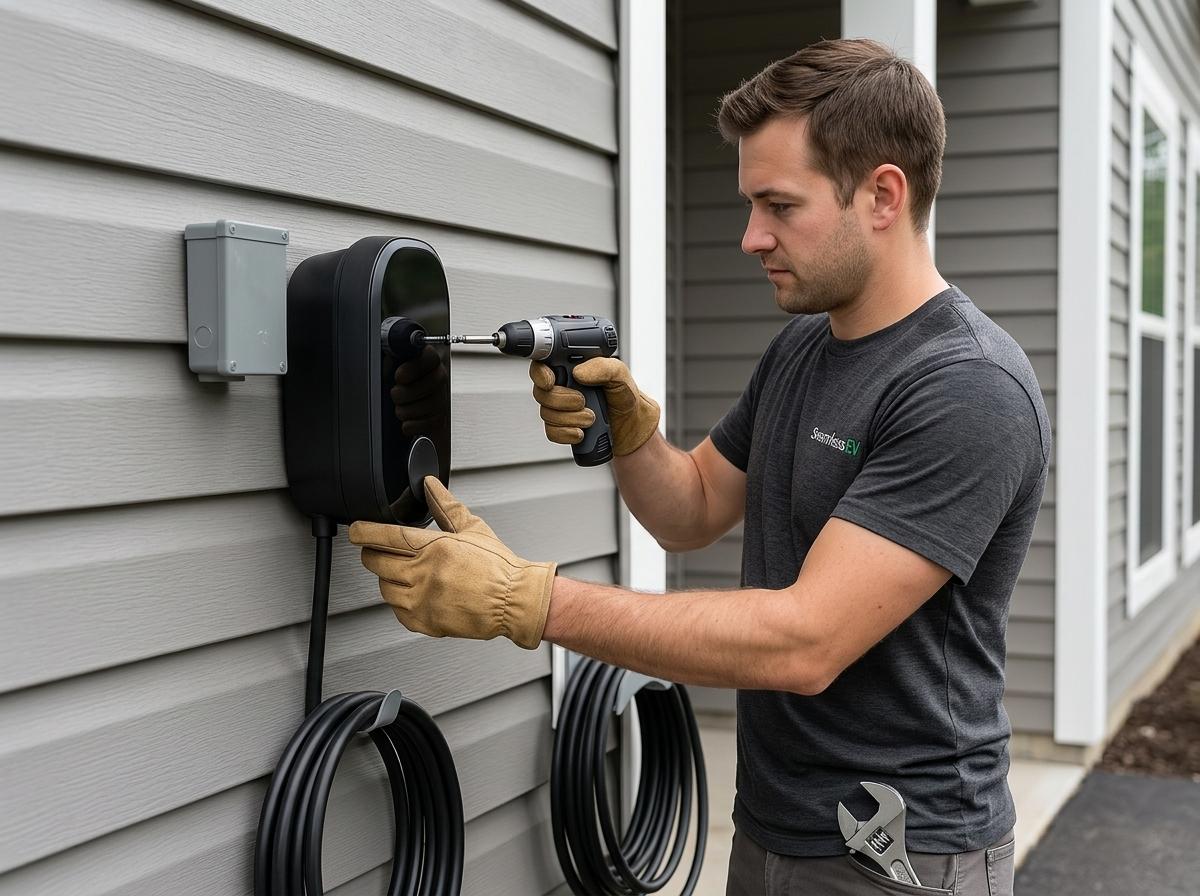
Proper placement and securing permits are critical steps in the installation process. They ensure both safety and compliance with local regulations.
Ideal Charger Placement
The location of your charger affects both convenience and safety. Ideally, place it where your vehicle parks most frequently. Consider the reach of the charging cable; it should comfortably connect without strain. Indoor garage installations protect equipment from weather, while outdoor setups need weatherproof enclosures. Think about future needs, such as additional vehicles or changes in parking habits, to choose a spot that remains practical over time.
Navigating EV Charger Permitting
Dealing with permits might seem daunting, but it’s a necessary step. Different areas have varying regulations and requirements. It’s best to start by contacting local authorities or your installer for guidance. Permits ensure the installation meets safety standards and local codes. While it might add time to your project, skipping this can lead to fines or redoing work. Proper permits protect both your investment and your property.
Inspection Process for Installations
Inspections guarantee your installation is safe and up to code. After installation, a local inspector will review the work. This step confirms that everything is correctly installed and functioning. While it might feel like an extra hurdle, inspections are about ensuring your home’s safety. Scheduling this step as soon as installation is complete can help you get the green light to start charging.
Costs, Incentives, and Timelines
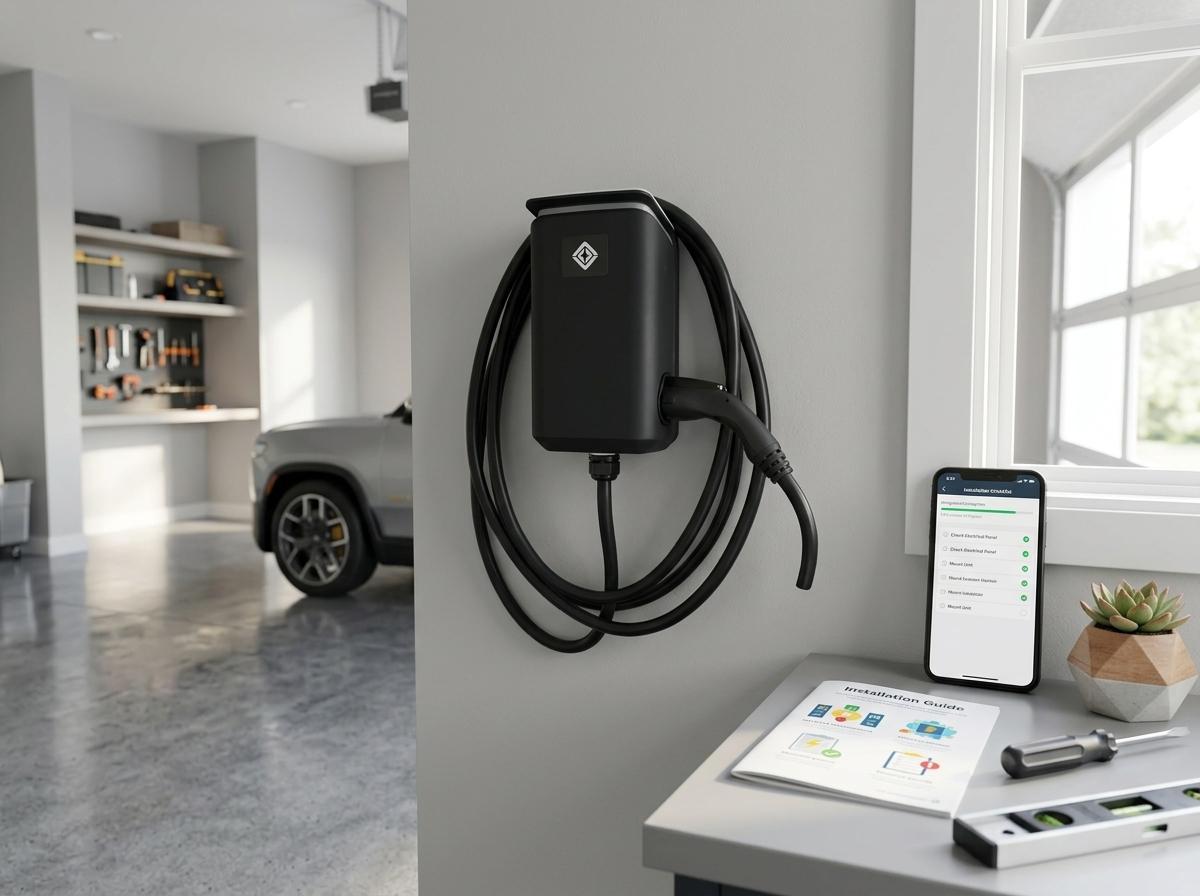
Understanding costs, available incentives, and expected timelines can save you from unexpected surprises.
Estimating Installation Costs
Installation costs vary based on factors like equipment choice and electrical upgrades. On average, you might spend a few hundred to several thousand dollars. Getting multiple quotes can provide a clearer picture of what to expect. Some companies offer all-inclusive packages, simplifying budgeting. Always ask about any hidden fees or additional costs to keep your expenses transparent.
Exploring EV Charging Rebates Virginia
Virginia offers rebates and incentives for EV charger installations. These can significantly reduce the overall cost. Programs may cover a portion of the equipment or installation expenses. Checking with local utility companies or government websites can reveal current offerings. Taking advantage of these incentives not only saves money but also supports sustainable choices.
Timelines for Installation Completion
The timeline for installation can vary. Factors include scheduling, permitting, and any required electrical upgrades. On average, expect the process to take a couple of weeks from start to finish. Planning ahead and coordinating with your installer can streamline the process. Promptly addressing any issues that arise will keep your project on track.
Frequently Asked Questions
How important is a 240V circuit for a Level 2 EV charger?
A 240V circuit is crucial for faster charging. It allows a Level 2 charger to operate efficiently, significantly reducing charging time compared to a 120V circuit.
What is the difference between a NEMA 14-50 outlet and a hardwired EVSE?
A NEMA 14-50 outlet offers portability, allowing you to unplug and move the charger. A hardwired EVSE is permanent, providing a cleaner setup with less risk of accidental disconnection.
Do I need an electrical panel upgrade for my EV charger installation?
An upgrade might be necessary if your current panel can’t handle the new load. A professional can perform a load calculation to determine if changes are needed for safe operation.
What should I consider for the placement of my EV charger?
Choose a spot where your vehicle parks frequently. Ensure the charging cable can reach comfortably. Consider both indoor and outdoor options, keeping future needs in mind.
Are there rebates available for EV charger installations in Virginia?
Yes, Virginia offers rebates that can cover part of the equipment or installation costs. Checking with local utilities and government resources can provide information on available programs.
Schedule your free site check.