Planning an EV charger installation in Northern Virginia means more than just picking a charger. You need to check your panel capacity, consider parking layout, and choose the right charger type for your home or business. Missing any of these steps can lead to delays, extra costs, or code issues. This guide breaks down what matters most so you can move forward with confidence in your EV charger installation Northern Virginia project. For more detailed information, you can consult resources like this installation guide.
Understanding Panel Capacity
When planning your EV charger installation, knowing your panel capacity is crucial. It ensures your electrical setup can handle the extra load without issues.
Determining Electrical Load Needs
To start, you need to assess your current electrical load. This involves checking how much electricity your household or business uses daily. You’ll want to consider all your appliances and devices. A licensed electrician can help calculate your total electrical load. This step is vital to prevent overloading your system, which could lead to disruptions or safety hazards.
Next, determine the additional load from the EV charger. Whether you’re considering a Level 1 or Level 2 charger, knowing its power requirements is key. For instance, a Level 2 charger can draw 30 to 50 amps depending on the model. This information helps you decide if your existing panel can support the charger or if upgrades are needed.
Panel Capacity Upgrades Explained
If your panel can’t support the new load, you might need an upgrade. Upgrading your panel increases its capacity, allowing it to handle more power safely. This often involves replacing circuit breakers or even the panel itself. It’s a job best left to professionals to ensure compliance with local codes and safety standards.
An upgraded panel not only supports your current needs but also prepares you for future expansions. For example, if you’re considering adding solar panels or more EV chargers down the line, a higher capacity panel will be beneficial. Understanding and planning for these needs early can save you time and money in the long run.
Designing Parking Layouts
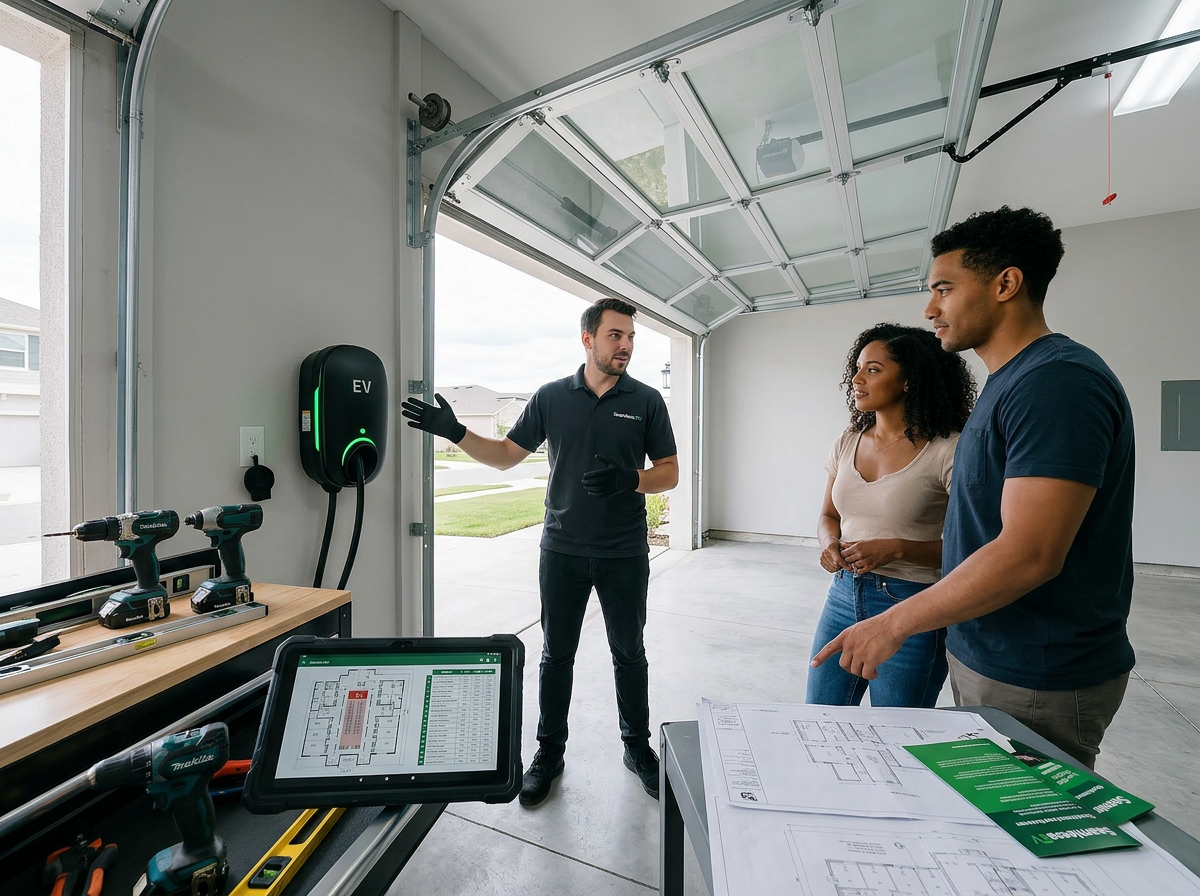
Once you’ve got your panel sorted out, it’s time to think about where your EV charger will go. The right parking layout makes charging convenient and accessible.
Optimizing EV Charger Placement
Placement is all about convenience and efficiency. You want your charger close to where you park your car to minimize the length and cost of wiring. However, there’s more to consider. Think about the charger’s proximity to power sources and any potential obstacles, such as walls or other vehicles.
The goal is to find a spot that minimizes cable length while allowing easy access for plugging in your vehicle. Also, consider future needs. If you plan to add more chargers, ensure there’s room to expand. This foresight can make the installation process smoother and more cost-effective.
ADA EV Charging Parking Guidelines
If you’re installing chargers for public or commercial use, ADA compliance is a must. The Americans with Disabilities Act requires specific guidelines for accessibility. These include designated parking spots, clear signage, and accessible pathways to the charger.
Ensuring ADA compliance not only opens up your charging station to more users but also helps avoid legal issues. It’s important to consult with professionals who understand these regulations to ensure your installation meets all necessary requirements.
Selecting the Right Charger Type
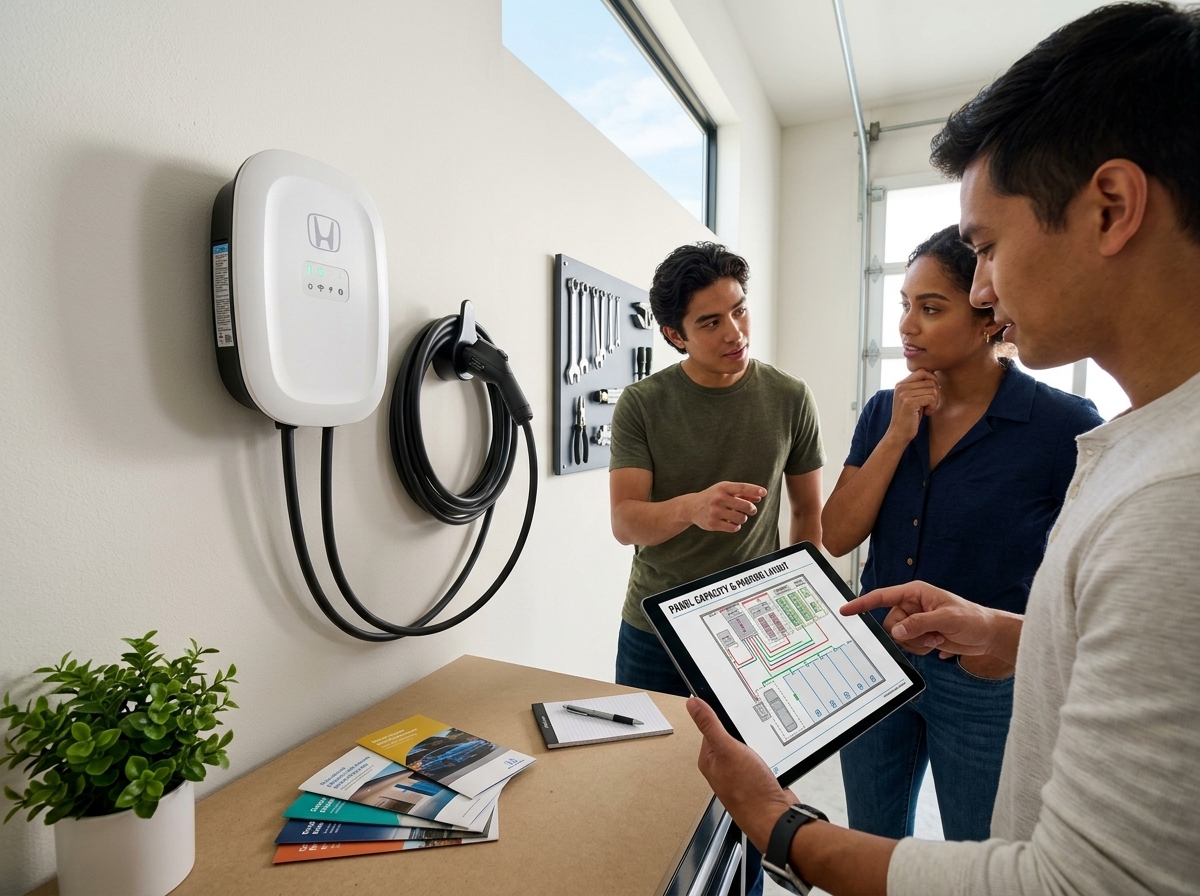
Choosing the right charger type is the final piece of the puzzle. It impacts how quickly you can charge your vehicle and the overall cost of your installation.
Level 1 vs. Level 2 Chargers
Level 1 chargers use a standard 120V outlet and are typically slower, taking up to 20 hours for a full charge. They’re best for overnight charging and lower daily mileage. On the other hand, Level 2 chargers require a 240V outlet and can charge your vehicle in 4-6 hours. They are ideal for more frequent use and higher daily mileage.
Deciding between the two depends on your driving habits and needs. If faster charging is a priority, a Level 2 charger might be worth the investment. However, if you’re okay with slower charging overnight, a Level 1 charger may suffice.
Popular Charger Brands and Models
There are several popular brands and models to consider. Tesla’s Wall Connector is a top choice for Tesla owners, offering reliability and seamless integration. For those looking for compatibility with various EVs, the ChargePoint Home Flex is a versatile option, supporting a range of vehicle types.
When selecting a charger, consider its features, warranty, and customer support. Reading reviews and consulting with experts can help you make an informed decision. Choosing the right charger ensures you get the most out of your EV experience.
Planning an EV charger installation involves multiple steps, from understanding panel capacity to deciding on the right charger type. By addressing these aspects, you can ensure a smooth and efficient installation process. For further guidance, reach out to professionals like Seamless EV, who can provide expert advice and reliable installation services.
Schedule your free site check.