Choosing the right EV charger setup for your Northern Virginia property doesn’t have to feel like solving a puzzle. Many homeowners and business owners get stuck deciding between Level 1 and Level 2 chargers, amperage needs, and panel capacity. This guide breaks down each factor clearly, so you can make smart choices without the guesswork. Keep reading to learn how to get a reliable, code-compliant EV charger installation Northern Virginia trusts. Learn more here.
Understanding EV Charger Levels
To make an informed decision, it’s crucial to understand the different EV charger levels. This section will help you compare Level 1 and Level 2 chargers, decide on the right amperage, and explore installation options.
Level 1 vs Level 2 Chargers
Level 1 chargers use a standard household outlet, providing a slow charge suitable for overnight needs. They are often more convenient for those who drive less. On the other hand, Level 2 chargers are faster, requiring a 240-volt outlet, like a NEMA 14-50 outlet. This option is perfect if you need quicker charges for daily use. You can check out more about choosing EV chargers from this comprehensive guide.
Choosing the Right Amperage
When it comes to amperage, consider your vehicle’s capabilities and your home’s electrical system. A typical Level 2 charger may require 30 to 40 amps. However, not every home can accommodate this. Consulting a professional to conduct a load calculation can help ensure your setup meets your needs without overloading your system.
Placement and Installation Options
Where you place your charger can impact installation costs and convenience. Most homeowners prefer garage installations for protection against weather. However, outdoor setups are also possible with weatherproof units. Professional guidance ensures the placement aligns with your electrical panel’s location for a smooth installation process.
Key Considerations for Your Setup
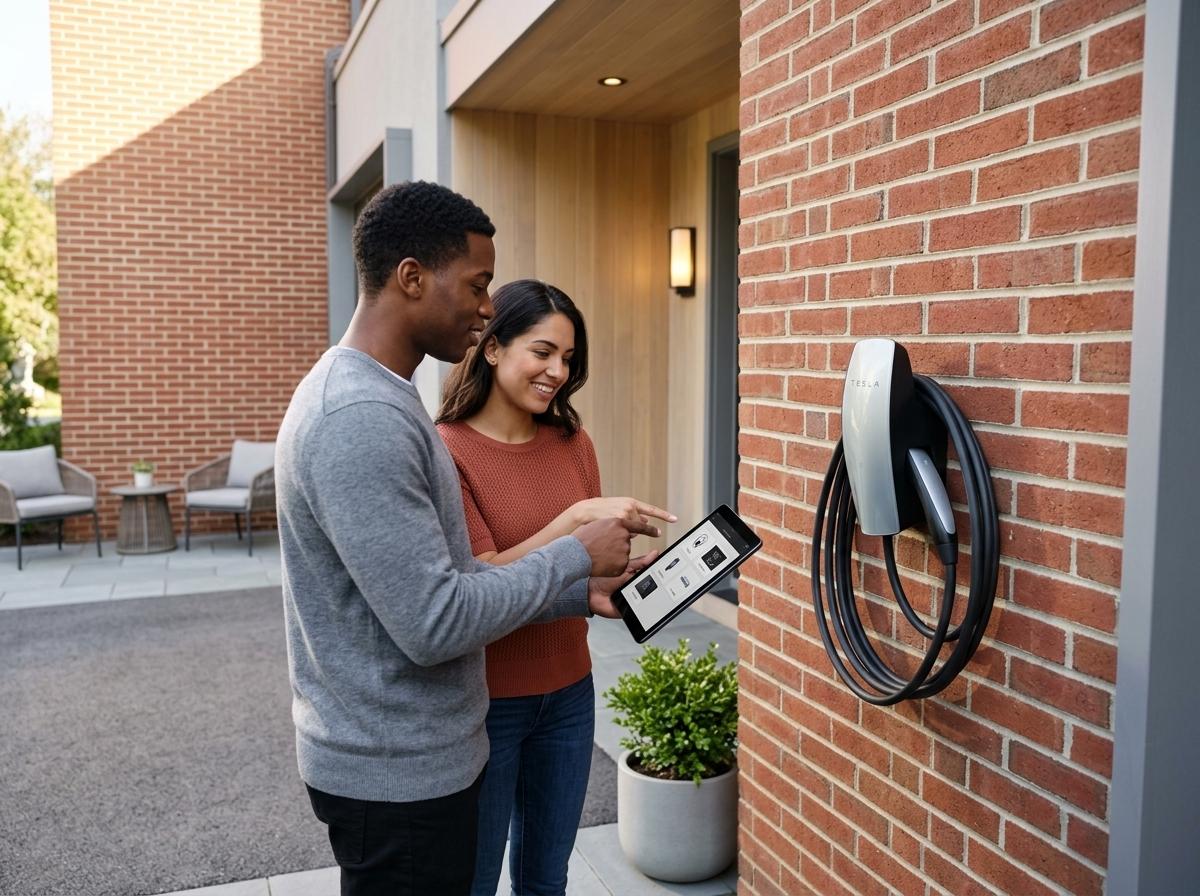
Beyond just the charger itself, consider additional factors like smart features, necessary permits, and electrical panel capacity before installation.
Smart Features and Connectivity
Modern chargers come with smart features that offer benefits such as remote management and energy usage tracking. These features can optimize your charging schedule and reduce costs. For a deeper dive into smart chargers, explore this article.
Permits and Code Compliance
In Northern Virginia, securing permits for installation is essential. This step ensures your setup complies with local codes, preventing future legal or safety issues. A professional installer can help navigate this process, ensuring everything is up to code.
Evaluating Electrical Panel Capacity
Your electrical panel’s capacity determines the feasibility of your charger installation. If your panel is insufficient, an upgrade might be necessary. This step is crucial for ensuring safe and effective charging. A professional evaluation can identify if an upgrade is needed.
Installation and Incentives
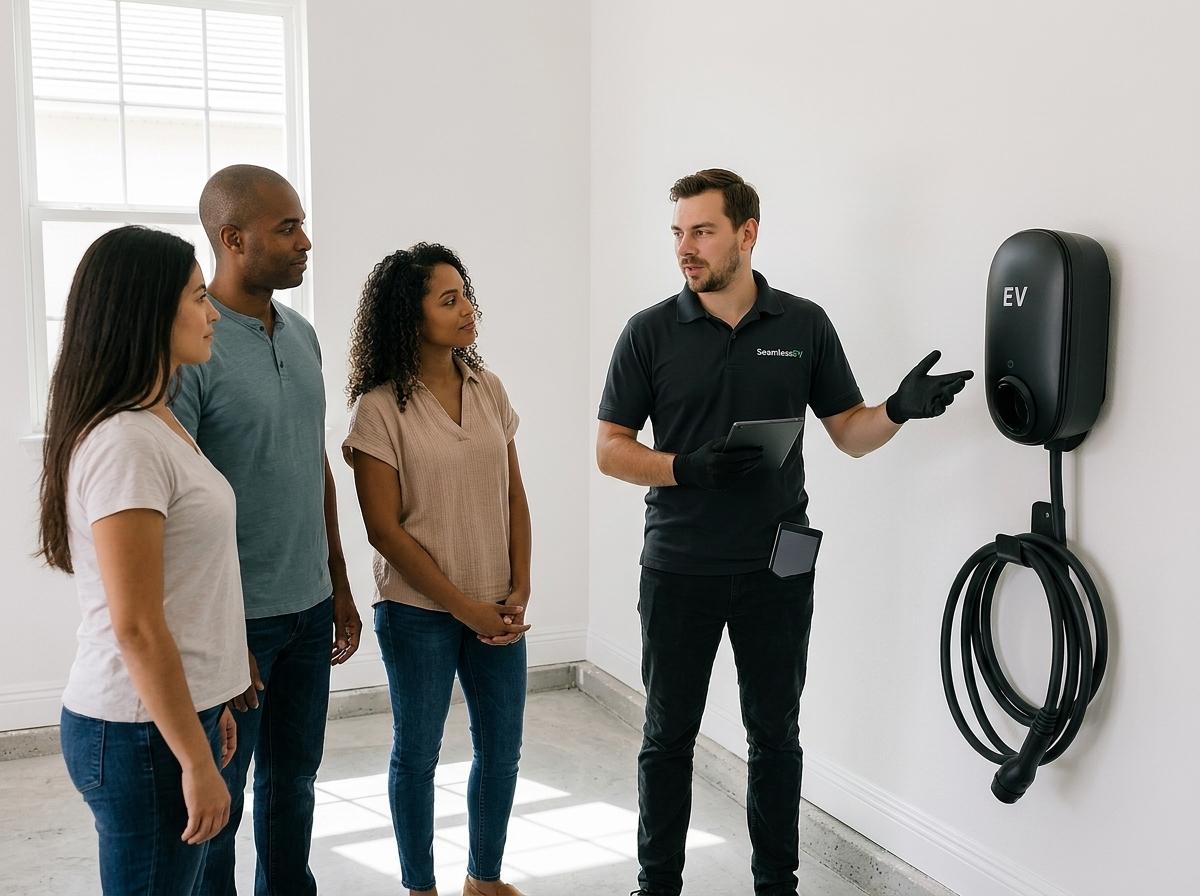
The final steps involve booking a professional evaluation, exploring available incentives, and understanding the installation process.
Booking a Professional Site Evaluation
A site evaluation by a certified professional is vital. It assesses your home’s readiness and provides a clear path forward. This step is the foundation for a smooth installation, ensuring all aspects are considered and addressed.
Available Rebates and Incentives
Incentives might be available to reduce installation costs. Checking for local, state, or federal rebates can save you money. It’s a good idea to explore all options and get started with this guide from the EPA.
Seamless Installation Process Steps
The installation process with Seamless EV is straightforward. It involves three main steps: initial consultation, site evaluation, and installation day. This structured approach ensures a hassle-free experience, allowing you to enjoy your new EV charger without unexpected surprises.
Frequently Asked Questions
What is the difference between Level 1 and Level 2 chargers?
Level 1 chargers use a standard 120-volt outlet, charging slowly but conveniently at home. Level 2 chargers require a 240-volt outlet and charge faster, making them ideal for frequent drivers.
Do I need a permit to install an EV charger at home?
Yes, you’ll need a permit to ensure your installation meets local codes. This step is critical for safety and compliance, and a professional can help navigate the process.
What should I consider when choosing the right charger for my home?
Consider your driving habits, the charging speed needed, and your home’s electrical capacity. Consulting a professional for a site evaluation can provide personalized advice.
Are there any incentives available for installing an EV charger?
Yes, various local, state, and federal incentives can help offset the cost of installation. Research available rebates in your area for potential savings.
How do I book a professional site evaluation?
Contacting a certified installer like Seamless EV is the first step. They’ll guide you through the process, ensuring your home is ready for installation.
Schedule your free site check.