
Choosing the right EV charger setup isn’t just about plugging in your car. Your panel capacity, placement options, and safety codes all play a crucial role in a reliable installation. If you’re planning EV charger installation Northern Virginia, understanding these factors helps avoid costly upgrades and ensures smooth operation. Keep reading to learn how to match your electrical load, pick the best location, and meet local codes before booking your Seamless EV site evaluation.
Understanding Panel Capacity
Before setting up an EV charger, understanding your panel capacity is crucial. It’s the foundation of a safe and reliable installation.
Evaluating Electrical Load
Knowing your home’s electrical load is vital. This is the total amount of electricity your home uses at any given time. To avoid overloading, which can be harmful, it’s essential to calculate the electrical load accurately. Start by looking at your main electrical panel. Most homes have a panel capacity of either 100, 150, or 200 amps. It’s typically displayed on the main breaker. If you’re unsure, a professional electrician can assist in determining your load capacity.
Choosing the Right Circuit
Selecting the appropriate circuit is key to an effective EV charger installation. Generally, a Level 2 EV charger requires a dedicated 240V circuit. This means it should have its own circuit breaker in your panel. The reason for this is to ensure the charger can operate without tripping other circuits. If your home doesn’t currently have this capability, you might need to consider a panel upgrade.
Importance of Panel Upgrade
Sometimes, your existing panel might not support an additional 240V circuit. In such cases, a panel upgrade is necessary. This upgrade increases the capacity of your electrical system, allowing it to handle the additional load of an EV charger. Not only does this ensure safety, but it also supports other future electrical needs you might have. Remember, an upgrade should be done by a qualified professional to maintain safety standards.
Strategic Charger Placement
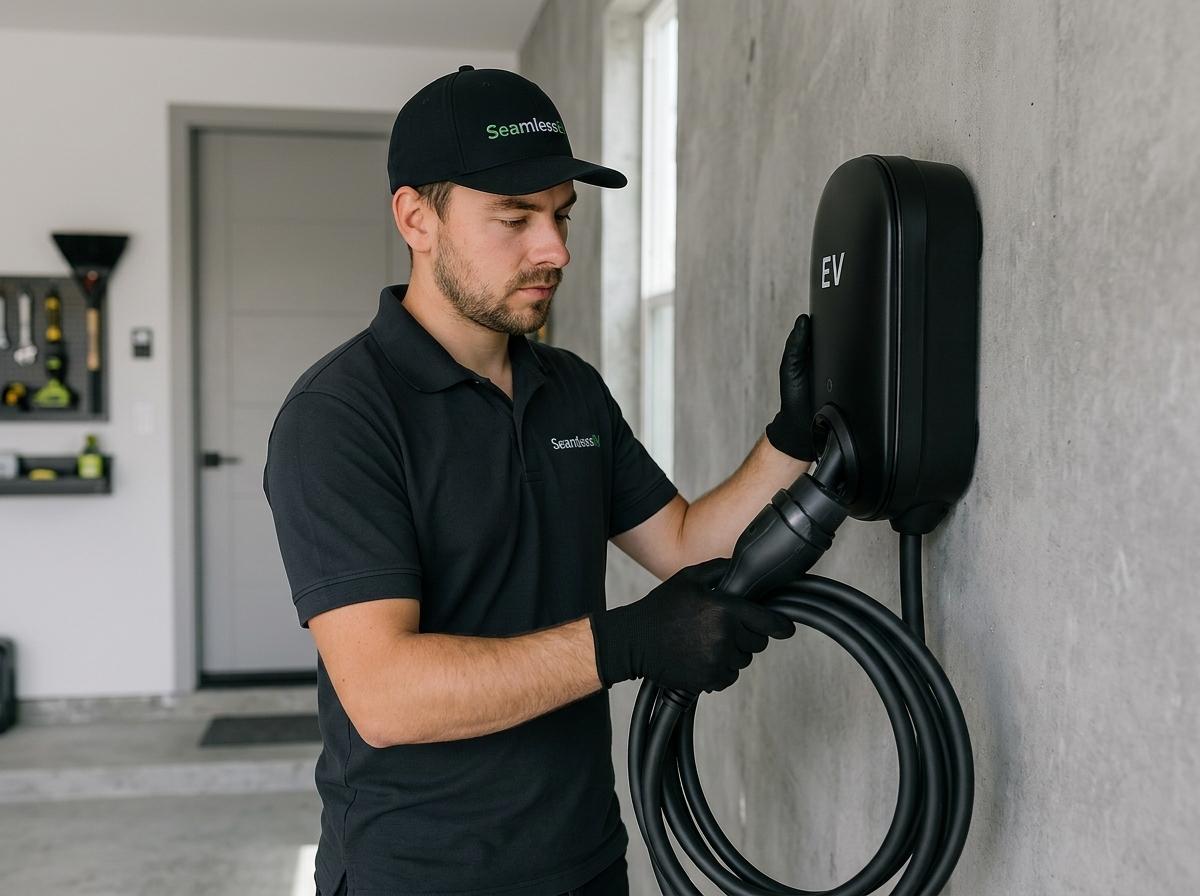
Choosing the right location for your charger is as important as the electrical setup. It affects convenience, safety, and compliance.
Indoor vs. Outdoor Options
When deciding between indoor and outdoor charger placement, consider convenience and protection from the elements. An indoor setup, typically in a garage, offers more protection from weather and potential tampering. However, if your garage is far from where you park, an outdoor setup might be more practical. Outdoor installations require weatherproof equipment and may involve additional costs like trenching or special conduit.
Code-Compliant Locations
Ensuring your installation meets local codes is non-negotiable. Local building codes dictate where and how chargers can be installed. A common requirement is keeping the charger a certain distance from water sources to prevent hazards. Checking these codes before installation can prevent costly changes later. Learn more about code compliance and installation.
NEMA 14-50 Outlet Considerations
For those using a portable charger, a NEMA 14-50 outlet might be suitable. It’s a common choice for its versatility and ease of use. However, it still needs proper installation to handle the power demand. Ensuring the outlet is properly grounded and weatherproof, if outdoors, is vital. This type of outlet also requires a dedicated 240V circuit, similar to a permanent charger installation.
Ensuring Safety and Compliance
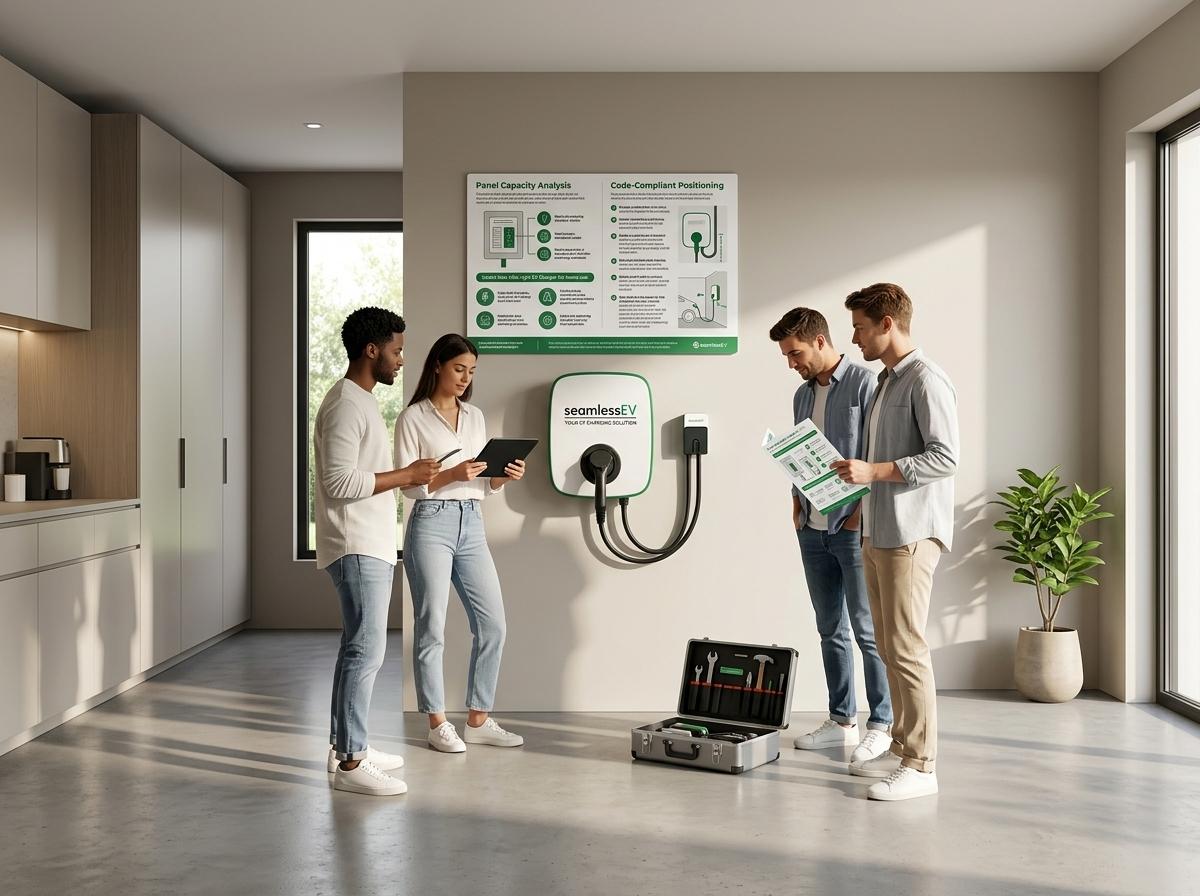
Safety and compliance are paramount in any electrical installation, more so with high-power devices like EV chargers.
Importance of GFCI Protection
Ground Fault Circuit Interrupter (GFCI) protection is essential for safety. It helps prevent electric shocks by cutting off the circuit if it detects a ground fault. For outdoor installations, GFCI protection is a must due to the increased risk of exposure to water. Even indoor installations benefit from this added safety layer, making it a wise investment for peace of mind.
Navigating NEC Code Requirements
Adhering to the National Electrical Code (NEC) requirements is crucial for legal and safety reasons. These codes provide guidelines on electrical installations, including EV chargers, to ensure they are safe and efficient. NEC codes cover everything from wire size and circuit breakers to grounding requirements. Familiarizing yourself with these can help you ensure your installation is compliant and avoid fines or hazards.
Permit and Inspection Essentials
Before installation, securing the necessary permits and scheduling inspections is a must. Local authorities require permits to ensure installations meet safety standards. Inspections further confirm compliance with local and national codes. While it might seem like a hassle, skipping this step can lead to legal issues or safety risks. Always consult with a professional installer who understands the local requirements.
Frequently Asked Questions
What is the difference between Level 1 and Level 2 chargers?
Level 1 chargers use a standard 120V outlet and are slower, ideal for overnight charging. Level 2 chargers use a 240V circuit, providing faster charging, suitable for daily use.
Do I need a permit to install an EV charger?
Yes, most jurisdictions require a permit for EV charger installation to ensure it meets safety codes. Consulting with a professional can help navigate this process.
Can I install an EV charger myself?
While possible, it’s not recommended due to the complexity and safety concerns. Professional installers ensure compliance with electrical codes and safety standards.
How do I know if my panel needs an upgrade?
If your panel can’t accommodate an additional 240V circuit, an upgrade is necessary. A professional electrician can evaluate your panel’s capacity and advise accordingly.
What is a NEMA 14-50 outlet?
A NEMA 14-50 outlet is a 240V outlet commonly used for portable EV chargers. It requires proper installation to ensure it handles the electrical load safely.
Schedule your free site check.